A recent report caught my attention: landed housing construction disputes now make up a significant and rising share of mediation cases in Singapore. Separately, a Straits Times report covered an HDB flat owner who had to go all the way to the High Court against a contractor that shuttered the firm before resolving a dispute. Construction disputes account for around 40% of the cases the Singapore Mediation Centre handles each year — which, going by the centre's typical annual caseload, works out to somewhere in the range of 150–200+ disputes a year, and that's before counting the ones that never get formally reported.
Buying a property is supposed to be a happy milestone. It shouldn't turn into a court case. Once a claim goes above the small claims threshold, you're required to engage your own lawyer — and legal fees for that can run $20,000–30,000 or more, win or lose. That's exactly why I want to walk through the most common dispute categories, and the practical steps that prevent you from ending up in one.
Wondering how this affects your own timeline?
Every zone and every buyer's numbers are different. Get a personalised read on the Draft Master Plan for your situation.
The 4 Most Common Dispute Categories
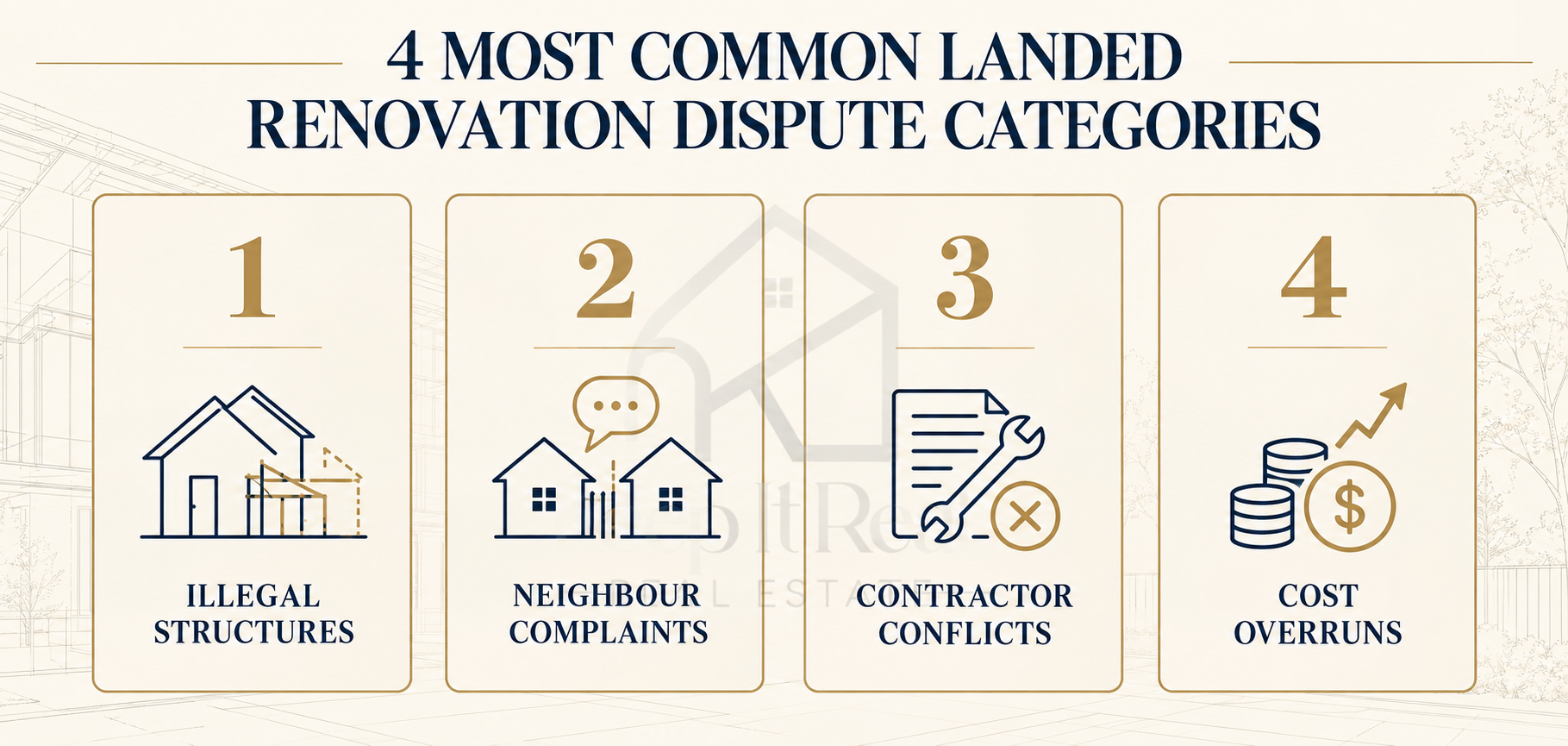
Illegal structures. Less common, but real — a previous owner erects a structure or wall without approval, and it becomes your problem to resolve once you've inherited the property.
Neighbour complaints. By far the most common. Renovation inevitably brings noise, dust, and a steady stream of workers in and out. Left unmanaged, this becomes genuinely disruptive for neighbours, and in the worst cases escalates to police involvement — almost always avoidable with better communication upfront.
Contractor conflicts. Poor workmanship, delays, and verbal promises the contractor can't later justify or stand behind.
Cost overruns. An agreed $50,000 contract quietly becoming a $70,000–80,000 final bill through variation orders (VOs). This is the one that hurts most financially, because it eats directly into the budget you may have earmarked for your next property purchase.
6 Tips to Avoid Becoming a Statistic
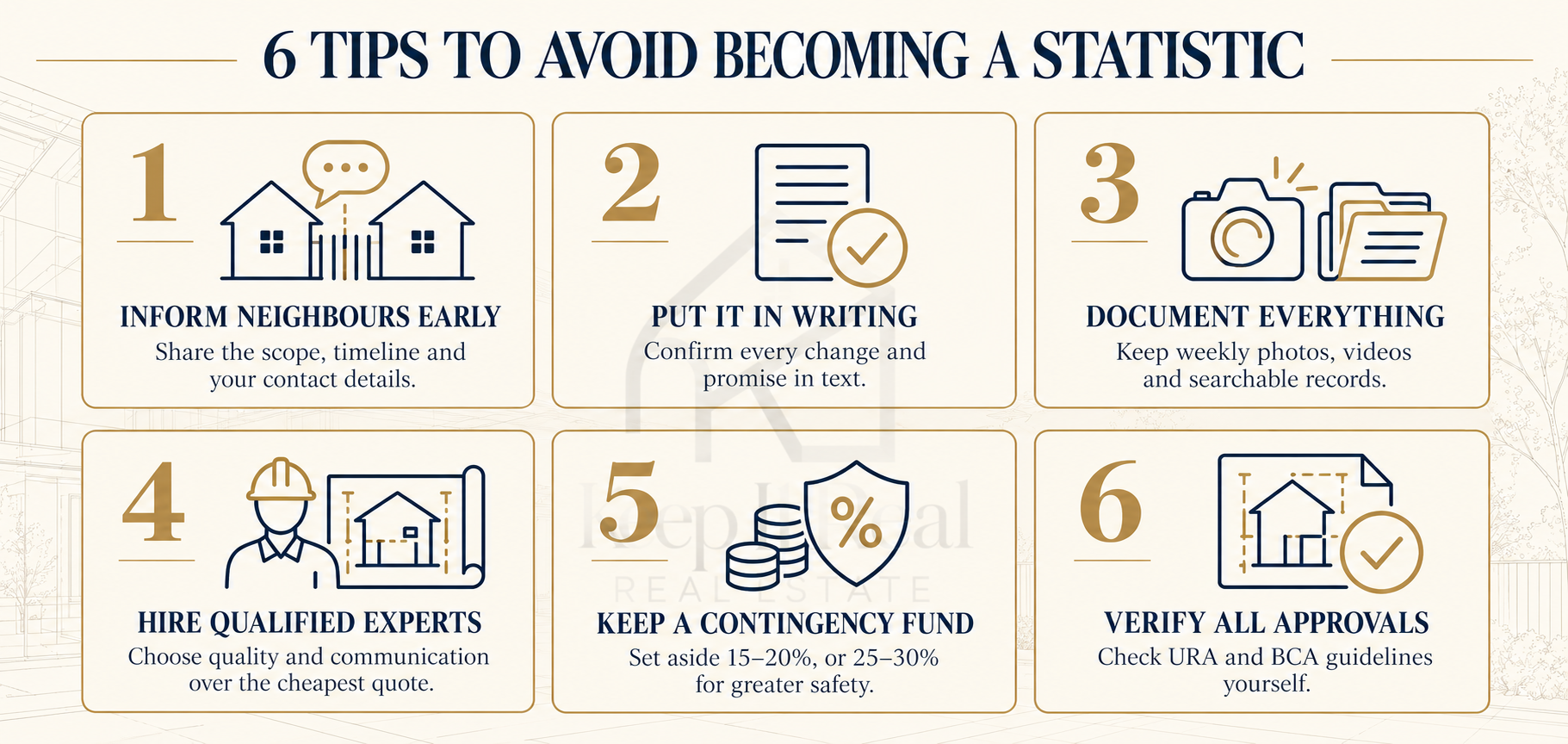
1. Respect your neighbours, and inform them early. Before major works start, introduce yourself, explain the scope and rough timeline, and leave your contact number. This isn't just good manners — it's practical risk management. When neighbours complain directly on-site, workers often stop immediately rather than risk conflict, which can cost you hours or even a full day of lost work while things get sorted out. A good contractor or architect can often handle this outreach on your behalf if you're not comfortable doing it yourself.
2. Never rely on verbal promises. A huge share of disputes trace back to a phone call where a change was verbally agreed, half-heard, or later disputed entirely — nobody's necessarily lying, it's simply how miscommunication happens. Push every material conversation into text: a WhatsApp message, a voice note you save, or a written confirmation after a call. If it's not written down, it effectively didn't happen when a dispute arises.
3. Document everything, and put it somewhere searchable. Screenshot cost and timeline conversations into a shared Google Doc rather than relying on WhatsApp's search function. Visit the site regularly — weekly at minimum for a multi-month renovation — and photograph progress. If you're pressed for time, even a 30-second walkthrough video each visit is enough to create a record you can refer back to if a milestone or promise is later disputed.
4. Hire a qualified project manager or architect — and prioritise quality over the cheapest quote. Three quotes for the same renovation can specify meaningfully different materials underneath a similar-looking number. Just as important: can you actually communicate well with this person? You'll be working with them for anywhere from a few months to over a year, and slow or vague responses early on are a reliable predictor of frustration later.
5. Budget a 15–20% contingency fund — 25–30% if you want a genuine safety margin. If you're planning to spend $1.5 million on a rebuild, budget as though the contracted cost is closer to $1.2 million, and treat the rest as buffer. Contractors competing for your business are naturally incentivised to quote with more basic materials to win the bid — and upgrades along the way (a nicer ceiling finish, a material change) commonly add another 20–30% to the original figure. This isn't necessarily anyone acting in bad faith; it's simply how renovation budgets tend to move once you're inside the project.

6. Get proper approvals — don't rely solely on your architect's word. Do your own due diligence against URA's guidelines for terrace and semi-detached houses, and check the BCA's resources on common disputes in private estates. The worst-case outcome in the article that prompted this post: a structure that had to be torn down after the fact — and removal costs frequently exceed the original cost of building it.
Final Thoughts
Buying a home is meant to be one of the happier decisions you make. A renovation dispute — especially one serious enough to reach the High Court — turns that into months of stress and legal cost that was almost always avoidable with better documentation and clearer expectations from day one. If you're planning a landed renovation or rebuild and want a second opinion on your contractor quotes or project scope before you commit, that's a conversation worth having early.
Get in touch with our team for a personalised assessment →

Have a specific area you're weighing?
Get in touch and I'll walk through what the Draft Master Plan means for your situation directly — no obligation.