I recently worked with two clients, both 29 years old. One bought a property above $4 million, the other went straight into a landed property above $5 million. It made me reflect, because in my 20s and early 30s, I wasn't anywhere close to that stage of decision-making. This post is a more personal one than usual. I want to walk through the three habits that genuinely delayed my own progress, in the hope that naming them helps you skip a few years of the same detour.
Wondering how this affects your own timeline?
Every zone and every buyer's numbers are different. Get a personalised read on the Draft Master Plan for your situation.
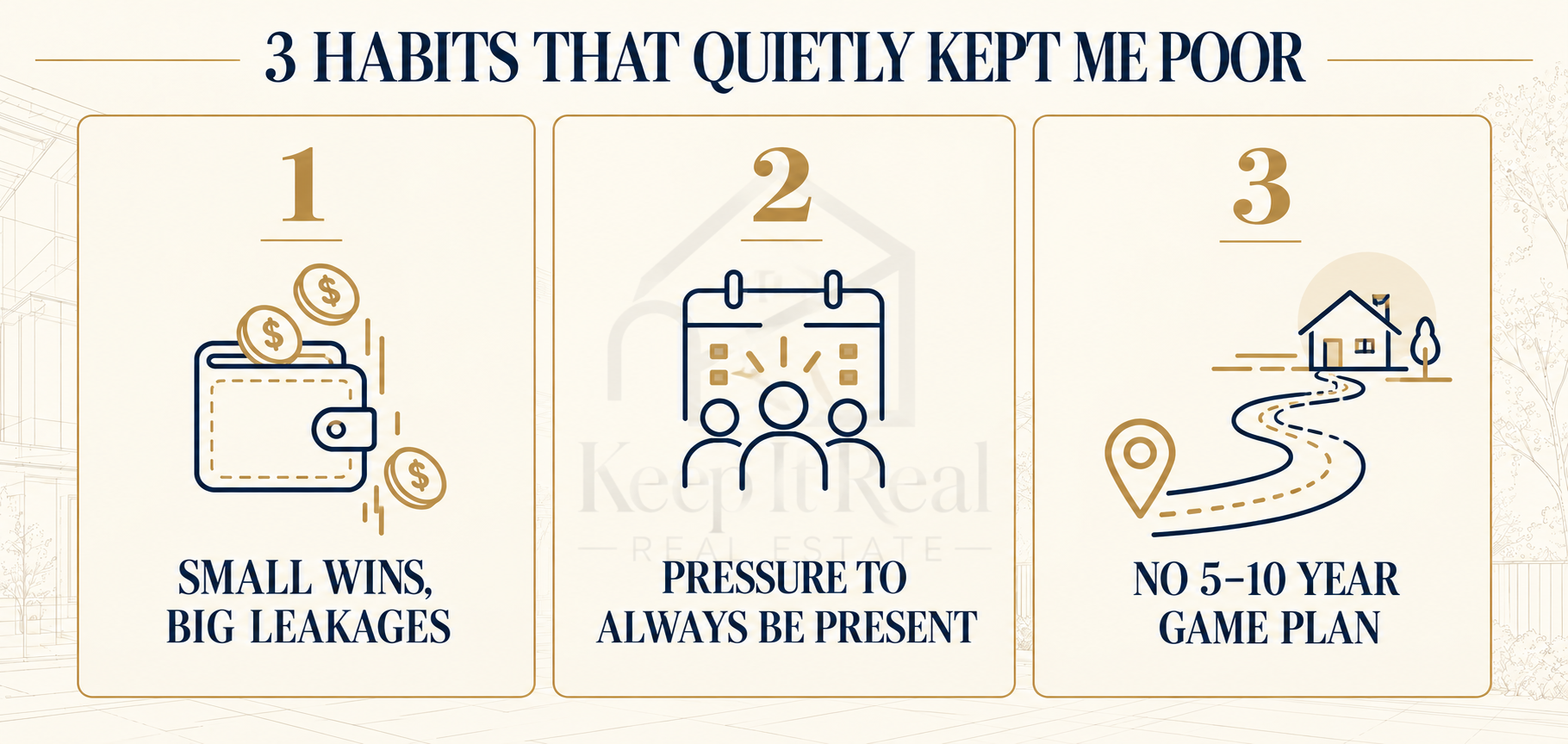
Habit 1: Chasing Small Wins While Creating Big Leakages
Every time I closed a deal and received commission, I'd reward myself; a watch, a car upgrade, often things I couldn't fully afford in cash. I've since sold nearly every watch I bought in my 20s and 30s, which is its own quiet proof that it wasn't the right call at the time. The story we tell ourselves,"it's fine, watches hold value, I'll sell it later when I need the cash for a property." Sounds reasonable, but ask yourself honestly: will you actually sell your favourite watch when the time comes? For most people, that's value preservation dressed up as an investment thesis, not real wealth accumulation, because in practice, you rarely sell.
To be clear, I don't think buying a watch or a car is inherently wrong. If it genuinely makes you happy and fits comfortably within your disposable income, there's nothing to fix. The issue isn't the purchase itself. It's chasing quick, instant-gratification wins as a pattern, without weighing them against the compounding cost of not putting that same capital toward a longer-term goal.
Habit 2: The Pressure to Always Be Present
In my 20s and early 30s, I felt like I had to say yes to everything; coffee, drinks, late-night meetups, constant networking. Looking back honestly, very little of it converted into real business. Most of the referrals I actually received came from people I didn't spend that much time with socially. What it did cost me was energy, next-day performance, and a meaningful amount of spending.
The fix isn't to disappear from your social life. It's mindfulness about which commitments are genuinely worth your energy versus which ones are habitual over-indulgence, including things like doom-scrolling or repeatedly checking group chats out of social pressure rather than genuine interest. Building wealth requires consistency in your work, your savings rate, and your routine; and that consistency comes directly from protecting your time and energy, not from being everywhere at once.
Habit 3: No Clear 5–10 Year Game Plan
This is the one that mattered most. My first home was an HDB flat, which is completely normal — roughly 80% of Singaporeans live in one. The issue wasn't the HDB flat itself. It was that I didn't have a clear plan for what came after.
My boss at the time challenged me to buy a compact two-bedroom condo in West Coast for around $1 million — today worth roughly $1.5 million. I talked myself out of it because it "wouldn't fit our family in 3 to 5 years," since we were planning for 2–3 kids. The irony: by the time we finally upgraded, it was still just me, my wife, and our dog. We'd spent years maintaining a five-room HDB flat that was, in hindsight, more space and more upkeep than we actually needed at that stage of life.
We eventually sold the HDB flat before the Minimum Occupation Period was up, at a loss of roughly $100,000 after accounting for the early exit — not including stamp duties and other selling costs. That was the moment it genuinely hit me: I hadn't been planning. I'd been reacting.
What Changed Once I Fixed This
Once we had real clarity on our goals, we stopped optimising for lifestyle upgrades; the pool, the gym, the extra space; and started optimising purely for capital growth. Instead of moving straight into a bigger resale condo, we sold our HDB flat, went into two new launches, and rented a compact two-bedroom unit in the OCR while waiting for them to complete. It was a significant lifestyle downgrade compared to our central HDB days, and it required real delayed gratification. But with a clear goal, every move had a purpose, and every step compounded into the next one.
That's genuinely how the property portfolio I have today was built. Not because we earned an exceptional income, but because our decisions became intentional rather than reactive. With clarity, you stop overspending on small wins, stop feeling pressure to be everywhere, and stop making short-term calls that quietly cost you the next four years.
The Underlying Lesson
All three habits traced back to the same root cause: the absence of a plan. It wasn't that I spent too much, and it wasn't the decision to buy an HDB flat first. It was the lack of direction underneath both. If you're not sure whether your current property trajectory is actually moving you toward something, or whether you're simply reacting one decision at a time, that's worth mapping out properly — ideally with a 5 to 10 year view, not just the next purchase.
Get in touch with our team for a personalised assessment →

Have a specific area you're weighing?
Get in touch and I'll walk through what the Draft Master Plan means for your situation directly — no obligation.